VEP (Visual Evoked Potential)


Home / Page

What is VEP?

Visual Evoked Potential (VEP) is a non-invasive neurological test that measures the electrical activity in the brain in response to visual stimulation. It helps evaluate how well the visual pathway, from the eyes to the occipital lobe of the brain, is functioning.

Why is VEP Important?

VEP is crucial for detecting and monitoring conditions that affect the optic nerve and visual pathways. It is commonly used to diagnose multiple sclerosis, optic neuritis, tumors affecting vision, amblyopia, and other neurological disorders. Even subtle vision-related nerve problems can be identified early through VEP.


Book your Test ✨

Basic VEP Test Components:

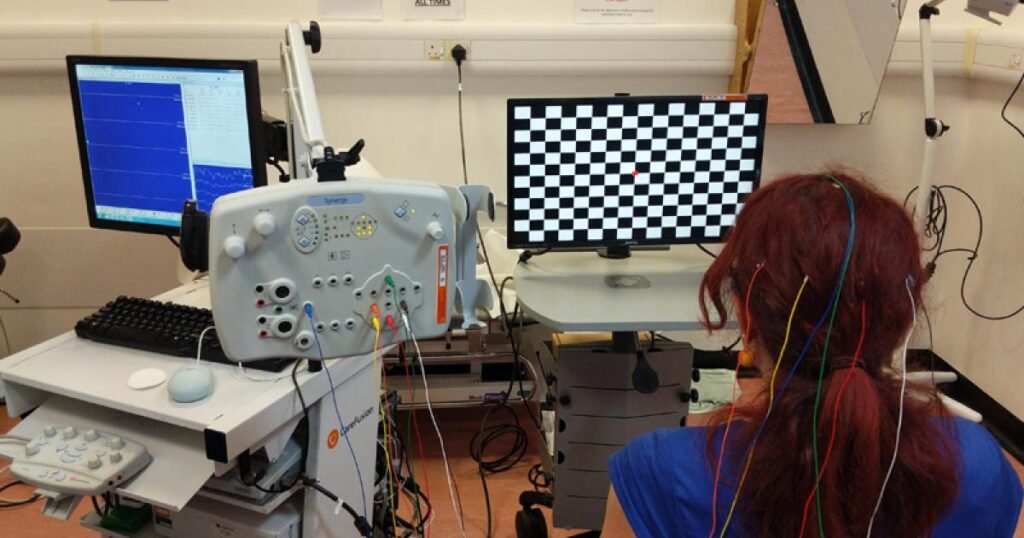
Pattern Stimulation – checkerboard or flashing light patterns are displayed to stimulate the eyes

Electrode Placement – small electrodes are attached to the scalp to capture brain signals

Signal Interpretation – the recorded data is analyzed to check the speed and strength of visual pathway responses

Response Recording – electrical activity generated by the brain is measured in response to visual input

What to Expect:

During the VEP test, you will sit comfortably and focus on a screen displaying patterns or flashing lights. Small electrodes are placed on your scalp to record brain activity. The test is safe, painless, and usually takes 30–45 minutes. Results provide valuable insight into the health of your optic nerve and brain’s visual processing.


Book your Test ✨

Explore our other Services :

CT Scan


Visit Now

Ultra Sound


Visit Now

Digital Extra


Visit Now

Mammography Test


Visit Now

Bone Dexa


Visit Now

ECG


Visit Now

ECHO


Visit Now

TMT


Visit Now

NCV


Visit Now

EEG


Visit Now

EMG


Visit Now

Pathology Test


Visit Now


Explore all Services

Scroll to Top