EMG (Electromyography)


Home / Page

What is EMG?

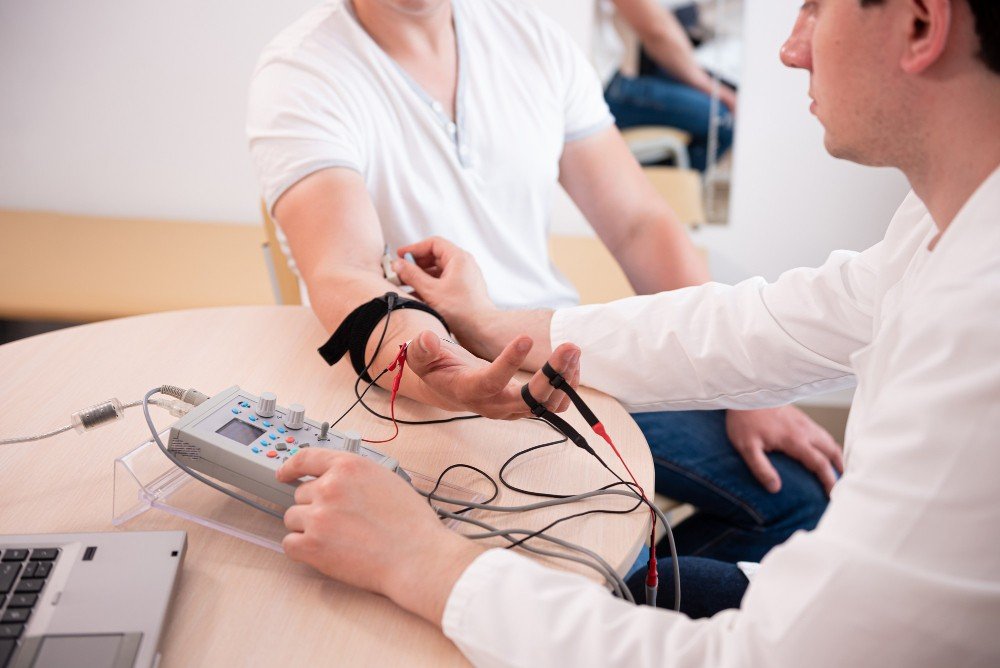
Electromyography (EMG) is a diagnostic test that measures the health of muscles and the nerve cells controlling them. It records the electrical activity of muscles during rest and contraction to detect abnormalities. EMG helps doctors diagnose muscle disorders, nerve damage, and motor neuron diseases like ALS. The test is safe, reliable, and widely used in evaluating neuromuscular conditions.

Why is EMG Important?

EMG is essential for diagnosing conditions that cause muscle weakness, numbness, tingling, or pain. It helps identify disorders such as herniated discs, pinched nerves, muscular dystrophy, and peripheral nerve diseases. EMG also guides treatment decisions, including whether surgery or physical therapy is needed.



Book your Test ✨

Basic EMG Tests:

Needle EMG – thin needle electrodes inserted into muscles to record electrical activity

Surface EMG – non-invasive, electrodes placed on the skin to measure muscle activity

Nerve Conduction Study (NCS) – often done with EMG to assess nerve signal speed and strength

Evoked Potentials – measures nerve response to stimulation for further diagnosis

What to Expect:

During the EMG, small electrodes or fine needles are placed on or into the muscle. The machine records the electrical signals as you relax or contract the muscle. The test may cause mild discomfort during needle insertion, but it is generally well tolerated and safe. Results are reviewed by a neurologist to confirm muscle or nerve conditions and plan the right treatment.


Book your Test ✨

Explore our other Services :

MRI


Book Now

CT Scan


Book Now

Ultrasound


Book Now

Color Doppler


Book Now

Digital X-Ray


Book Now

HSG


Book Now

Pathology


Book Now

ECG


Book Now

TMT


Book Now

2D Echo


Book Now

Holter


Book Now

EEG


Book Now

NCV


Book Now

PFT


Book Now


Explore all Services

Scroll to Top