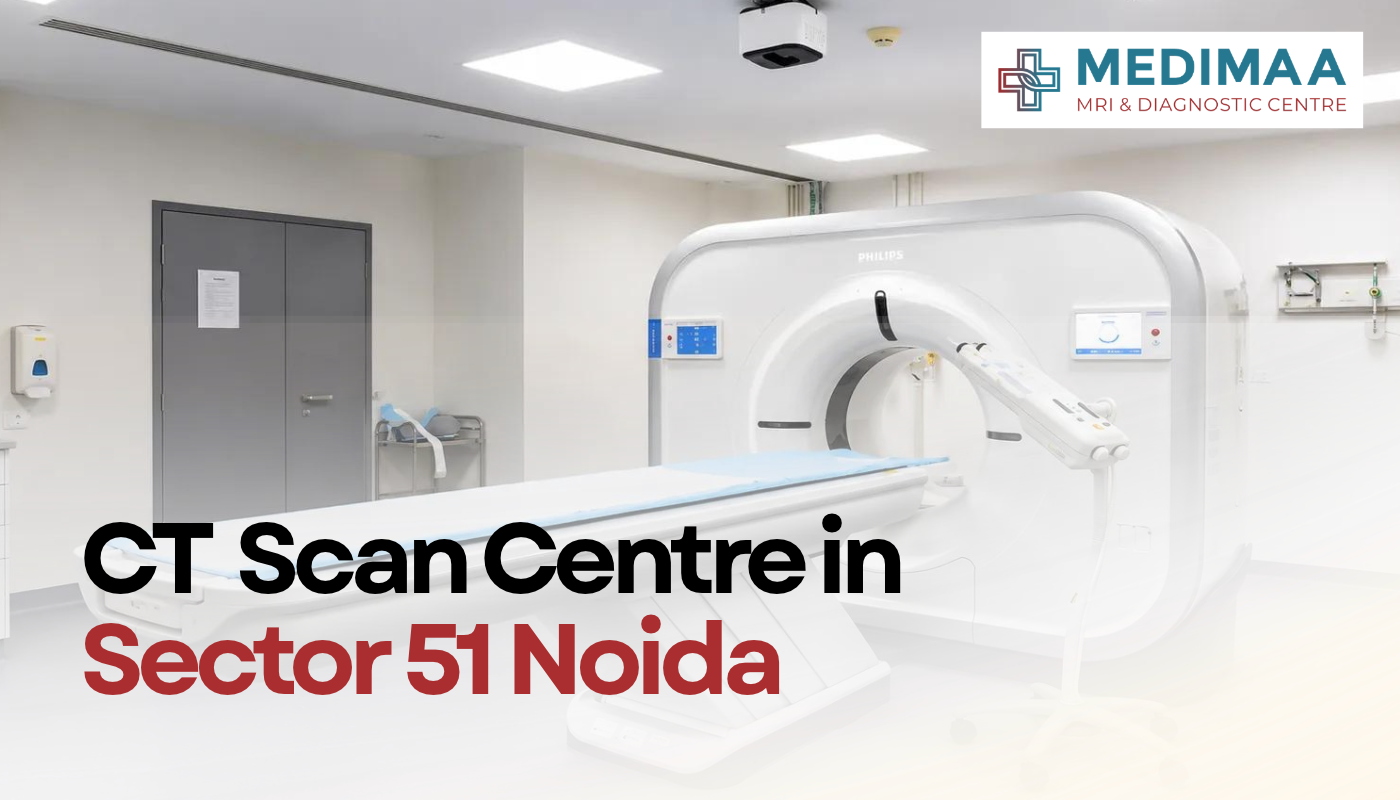
When your doctor recommends a CT scan, finding the right diagnostic centre is an important step towards understanding your health condition. Whether you need a CT brain scan, HRCT chest, CT abdomen or another specialised examination, choosing a reliable diagnostic facility can help ensure that the required images are captured properly and interpreted by qualified professionals.
For patients living in Sector 51, Sector 50, Hoshiyarpur and nearby areas, finding a convenient and reliable CT Scan Centre in Sector 51, Noida can make the diagnostic process easier.
However, choosing a CT scan facility involves more than comparing prices or selecting the nearest location. Factors such as imaging technology, radiologist expertise, patient safety, scan preparation, reporting time and service availability should also be considered.
In this guide, we will explain the different types of CT scans, when doctors recommend them, how to prepare for the procedure and what to look for when choosing a CT scan diagnostic centre in Noida.
What Is a CT Scan and Why Is It Recommended?
A CT scan, also known as Computed Tomography, is a medical imaging procedure that uses X-rays and computer processing to create detailed cross-sectional images of the body.
Unlike conventional X-rays, which produce images from a particular angle, CT scans generate multiple images that allow doctors to examine internal organs, bones, blood vessels and soft tissues in greater detail.
Doctors may recommend a CT scan to:
- Investigate unexplained pain or swelling.
- Examine internal injuries after an accident.
- Detect certain infections and inflammatory conditions.
- Evaluate lung and chest abnormalities.
- Identify certain abnormalities in the brain.
- Examine abdominal and pelvic organs.
- Assess fractures and other bone-related conditions.
- Support the evaluation and monitoring of certain cancers.
The type of CT scan recommended depends on the patient’s symptoms, medical history and the doctor’s clinical assessment.
Different Types of CT Scans Available
CT scans are performed on different body parts depending on the diagnostic requirements. Before booking an appointment, patients should understand which examination has been prescribed.
Here are some commonly performed CT scan examinations.
1. CT Brain Scan
A CT brain scan produces detailed images of the brain and surrounding structures. Doctors may recommend it when evaluating certain neurological symptoms, head injuries or suspected bleeding within the brain.
Common indications include:
- Head injuries and trauma.
- Suspected brain haemorrhage.
- Sudden neurological symptoms.
- Certain types of persistent or severe headaches.
- Evaluation of selected brain abnormalities.
Depending on the clinical requirement, a doctor may recommend a plain CT brain or a contrast-enhanced examination.
2. HRCT Chest Scan
HRCT stands for High-Resolution Computed Tomography. It is a specialised CT examination that produces detailed images of lung tissue.
Doctors may recommend an HRCT chest scan to investigate:
- Interstitial lung abnormalities.
- Pulmonary fibrosis.
- Certain lung infections.
- Bronchiectasis.
- Other suspected lung conditions.
An HRCT chest scan helps doctors examine lung structures in greater detail than a conventional chest X-ray.
3. CT Abdomen Scan
A CT abdomen scan examines internal abdominal organs, including the liver, pancreas, kidneys, spleen and digestive structures.
It may be recommended to investigate:
- Unexplained abdominal pain.
- Suspected kidney stones.
- Certain abdominal infections.
- Abnormalities involving internal organs.
- Suspected masses or tumours.
- Selected digestive system conditions.
Depending on the clinical requirement, the examination may be performed without contrast or with intravenous contrast.
4. CT KUB Scan
CT KUB refers to Computed Tomography of the Kidneys, Ureters and Bladder.
Doctors commonly recommend this examination when evaluating suspected urinary stones and certain urinary tract conditions.
It can help identify the location, size and number of urinary stones.
5. CT Chest Scan
A CT chest scan produces detailed images of structures within the chest, including the lungs, airways, heart and surrounding tissues.
Doctors may recommend it to investigate:
- Lung nodules.
- Certain chest infections.
- Abnormalities detected on an X-ray.
- Chest injuries.
- Selected lung and mediastinal conditions.
The appropriate CT protocol depends on what the doctor needs to evaluate.
6. CT Scan with Contrast
Some CT examinations require a contrast agent to improve the visibility of particular organs, blood vessels or other structures.
Contrast-enhanced CT scans may be recommended for specific abdominal, chest, vascular and other diagnostic evaluations.
The contrast agent is commonly administered through an intravenous line, although the method depends on the examination.
Before undergoing a contrast-enhanced CT scan, patients should inform the medical team about previous contrast reactions, kidney problems, allergies and relevant medical conditions.
How to Choose the Right CT Scan Centre in Sector 51, Noida?
Finding the right diagnostic facility is important for a smooth and properly conducted examination.
If you are searching online for a CT Scan Centre Near Sector 51 Noida, consider the following factors before booking your appointment.
1. Check the Available CT Imaging Technology
The technology available at a diagnostic centre is an important consideration.
Different CT examinations require different scanning protocols and imaging capabilities. A suitable CT system should be capable of performing the specific examination prescribed by your doctor.
Before booking, ask:
- What type of CT examinations are available?
- Can the centre perform the scan prescribed by your doctor?
- Are appropriate imaging protocols followed?
- Is the equipment regularly maintained?
- Are radiation dose optimisation practices followed?
Modern CT systems and appropriate scanning protocols can help produce diagnostically useful images while managing radiation exposure.
2. Consider the Expertise of Radiologists and Technicians
A CT examination involves more than operating an imaging machine.
Qualified radiologists interpret the captured images and prepare diagnostic reports. Experienced CT technicians help position patients correctly and follow the required imaging protocols.
When selecting a CT Scan Diagnostic Centre in Noida, consider whether the facility has:
- Qualified radiologists for image interpretation.
- Trained CT technicians.
- Appropriate patient screening procedures.
- Clear communication before and during the examination.
- A structured reporting process.
Professional expertise plays an important role in the overall quality of diagnostic imaging.
3. Compare CT Scan Prices and Understand the Charges
CT scan prices vary depending on the examination, body part, scanning protocol and whether contrast is required.
For example, a CT brain scan, HRCT chest and contrast-enhanced CT abdomen are different examinations and may have different charges.
Patients searching for an Affordable CT Scan Centre in Noida should compare the total cost rather than selecting a facility based only on its advertised starting price.
Before confirming your appointment, ask:
- What is the total price of the prescribed CT scan?
- Is contrast included in the quoted price?
- Are additional investigations or preparation charges applicable?
- What is the expected report delivery time?
- Are digital images and reports provided?
Transparent pricing helps patients plan their diagnostic expenses more effectively.
4. Check Patient Safety and Radiation Protection Practices
CT scans use ionising radiation to produce diagnostic images. Therefore, radiation safety is an important consideration when selecting a CT scan facility.
A responsible diagnostic centre should follow appropriate radiation protection protocols and use examination settings suited to the patient’s clinical requirements.
Before the examination, inform the medical team if:
- You are pregnant or may be pregnant.
- You have previously experienced a reaction to CT contrast.
- You have kidney-related health conditions.
- You have relevant allergies or medical conditions.
- You are taking medications that may be relevant to the procedure.
Patients should also ask whether the prescribed examination requires contrast and whether any additional precautions are necessary.
A CT scan should be performed when medically indicated, with the expected diagnostic benefits considered against the potential risks.
5. Look for Convenient Appointment Availability
When a doctor recommends a CT scan, patients may want to complete the examination without unnecessary delays.
Choosing a conveniently located CT scan centre can make travelling and appointment management easier.
Before visiting, check:
- Whether advance appointments are available.
- Whether same-day appointments can be arranged.
- The estimated examination duration.
- Whether urgent scans can be accommodated.
- The expected reporting time.
It is advisable to confirm the appointment in advance, particularly for contrast-enhanced examinations.
6. Evaluate Reporting Time and Report Accessibility
The CT scan report is an important part of the diagnostic process because it helps your treating doctor evaluate the findings and decide on further management.
Before booking, ask about the expected turnaround time and how the report will be delivered.
Useful factors to consider include:
- Availability of radiologist-interpreted reports.
- Digital report access.
- Availability of scan images.
- Clear communication regarding report collection.
- Procedures for obtaining previous reports when needed.
Reporting timelines may vary depending on the examination and its complexity.
7. Choose a Conveniently Located Diagnostic Centre
Location can make a difference, especially for elderly patients, individuals experiencing pain and patients who may require multiple diagnostic investigations.
If you live near Sector 51, Sector 50, Hoshiyarpur or nearby residential areas, choosing a CT Scan Centre Near Me in Noida can reduce travel inconvenience.
Consider the centre’s accessibility, parking arrangements, nearby landmarks and available transportation options before making your decision.
How to Prepare for a CT Scan?
CT scan preparation depends on the body part being examined and whether contrast material is required.
Following the diagnostic centre’s instructions can help avoid unnecessary delays or rescheduling.
Here are some general preparation guidelines.
1. Carry Your Doctor’s Prescription
Bring the prescription or referral mentioning the CT examination recommended by your doctor.
2. Share Your Medical History
Inform the diagnostic team about kidney problems, previous contrast reactions, allergies, pregnancy or other relevant medical conditions.
3. Follow Fasting Instructions
Some CT examinations, particularly certain contrast-enhanced abdominal studies, may require fasting. However, fasting is not necessary for every CT scan.
Always follow the specific instructions provided by the centre.
4. Carry Previous Reports
Previous CT scans, X-rays, ultrasound reports or other relevant investigations can help the radiologist compare findings when appropriate.
5. Wear Comfortable Clothing
You may be asked to remove metal objects, jewellery or certain clothing items before the examination.
6. Arrive Before Your Appointment
Arriving a little early allows sufficient time for registration, medical screening and preparation.
What Happens During a CT Scan?
Many patients feel uncertain before their first CT examination. Understanding the procedure can help reduce unnecessary anxiety.
A typical CT scan involves the following steps:
Step 1: Registration and Screening
The diagnostic team verifies the prescription, patient details and relevant medical history.
Step 2: Patient Preparation
You may be asked to remove jewellery or metal objects and change into suitable clothing if necessary.
If contrast is required, the team will explain the procedure and complete the necessary screening.
Step 3: Positioning on the Scanner
You will lie on a movable examination table that passes through the CT scanner.
The technician will guide you into the correct position.
Step 4: Image Acquisition
The scanner captures multiple X-ray images from different angles. You may be asked to remain still or briefly hold your breath during certain scans.
Step 5: Completion and Reporting
After the examination, the images are processed and interpreted by a radiologist. The report is then shared according to the centre’s reporting process.
Many routine CT examinations take only a few minutes for image acquisition, although the complete appointment may take longer depending on preparation and the type of scan.
Why Choose Medimaa MRI & Diagnostic Centre for a CT Scan in Sector 51, Noida?
If you are searching for a CT Scan Centre in Sector 51, Noida, Medimaa MRI & Diagnostic Centre is a conveniently located diagnostic facility offering CT scans and other imaging services.
Located at Ramshree Complex, opposite Pillar No. 228, Sector 51, Noida, Medimaa provides multiple diagnostic services at one location.
Diagnostic Imaging Services at Medimaa
Depending on your doctor’s recommendation, you can enquire about different diagnostic investigations, including:
- CT Scan
- MRI Scan
- Digital X-Ray
- Ultrasound
- Colour Doppler
The facility also offers additional diagnostic services such as ECG, TMT and pathology testing.
Why Consider Medimaa?
Multiple Diagnostic Services Under One Roof
Patients can enquire about different imaging and diagnostic investigations at a single location, making it convenient when multiple tests are prescribed.
Convenient Sector 51 Location
Medimaa is located in Sector 51, near Hoshiyarpur and Shivalik Hospital, making it accessible for patients from nearby areas.
Appointment Assistance
Patients can contact the centre to enquire about CT scan availability, examination requirements and appointment scheduling.
Patient Guidance
The diagnostic team can provide information about the prescribed examination, necessary preparation and relevant safety precautions.
Transparent Pricing Information
Patients can enquire about applicable CT scan charges and any additional requirements before confirming their appointment.
If your doctor has recommended a CT scan, contact Medimaa to check the availability of the specific examination and understand the preparation instructions.
Frequently Asked Questions About CT Scans in Noida
1. Where can I get a CT scan in Sector 51, Noida?
You can visit Medimaa MRI & Diagnostic Centre, located at Ground Floor, Ramshree Complex, opposite Pillar No. 228, Sector 51, Noida. Contact the centre to enquire about the availability of your prescribed CT examination.
2. What is the cost of a CT scan in Noida?
The cost depends on the type of CT examination, body part being scanned, scanning protocol and whether contrast is required. Contact the diagnostic centre for the latest price of your prescribed examination.
3. Is a CT scan painful?
No. A CT scan is generally a painless, non-invasive imaging procedure. However, some patients may experience mild discomfort from remaining in one position. If intravenous contrast is administered, temporary sensations such as warmth or a metallic taste may occur.
4. How long does a CT scan take?
The image acquisition for many routine CT scans takes only a few minutes. However, the complete procedure may take longer depending on the type of examination, patient preparation and contrast requirements.
5. Is fasting necessary before a CT scan?
Not every CT examination requires fasting. Certain abdominal or contrast-enhanced studies may require specific preparation. Always follow the instructions provided by your diagnostic centre.
6. Is a CT scan safe?
CT scans use ionising radiation, so they should be performed when medically justified. Modern imaging protocols aim to manage radiation exposure while obtaining diagnostically useful images. Patients should inform the medical team about pregnancy or possible pregnancy before the examination.
7. What is the difference between a CT scan and an MRI?
A CT scan uses X-rays to produce cross-sectional images of the body, whereas an MRI uses magnetic fields and radio waves.
CT scans are commonly used to evaluate bones, lungs, trauma and certain internal conditions. MRI is often preferred for detailed evaluation of soft tissues, joints, the brain and spinal structures.
The choice depends on the clinical requirement and your doctor’s recommendation.
8. Can I get a CT scan without a doctor’s prescription?
CT scans involve ionising radiation, so a doctor’s recommendation is important to establish the need for the examination and select the appropriate protocol. Contact the diagnostic centre to confirm its prescription and booking requirements.
Book Your CT Scan at Medimaa MRI & Diagnostic Centre, Sector 51, Noida
Choosing an appropriate CT scan facility is an important step in your diagnostic journey. From imaging technology and professional expertise to radiation safety, transparent pricing and convenient appointment scheduling, several factors deserve attention before booking.
If you are looking for a CT Scan Centre in Sector 51, Noida, Medimaa MRI & Diagnostic Centre offers CT scan and other diagnostic imaging services at a convenient location.
Contact Medimaa to enquire about your prescribed CT scan, check appointment availability and understand the necessary preparation before visiting.
Medimaa MRI & Diagnostic Centre
Address: Ground Floor, Ramshree Complex, Opposite Pillar No. 228, Sector 51, Noida, Uttar Pradesh.
Phone: +91 8527 8527 98
WhatsApp: +91 8527 8527 99
Website: https://medimaahealth.in/
Book your CT scan appointment and get the diagnostic support you need.
Medical Disclaimer: This article is intended for general educational purposes and does not replace professional medical advice. The need for a CT scan, choice of examination and preparation requirements should always be determined by a qualified medical professional.