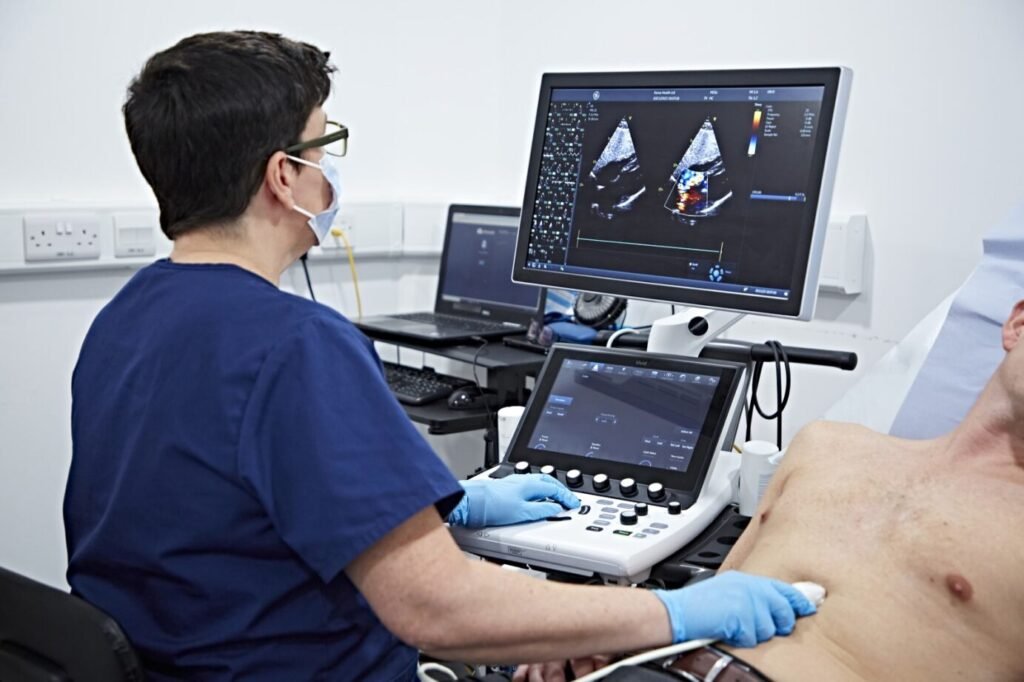
ECHO (Echocardiogram)

What is ECHO?

An ECHO (Echocardiogram) is a non-invasive test that uses ultrasound waves to create moving images of the heart. It allows doctors to evaluate the size, shape, and function of the heart. The test is painless, safe, and usually takes about 30 minutes. An ECHO can detect conditions such as irregular heartbeats, valve issues, heart murmurs, and signs of an enlarged or weakened heart.


Why is ECHO Important?

ECHO tests help doctors identify heart abnormalities at an early stage. They provide critical information about heart function, detect damage caused by previous heart attacks, and guide treatment for conditions such as valve disease or heart failure. It is one of the most reliable tools for monitoring ongoing heart health and preventing complications.

Types of ECHO Tests:

Transthoracic Echocardiogram (TTE) – Standard test that captures heart images through the chest.

Transesophageal Echocardiogram (TEE) – Provides detailed images using a probe inserted through the esophagus.

Stress Echocardiogram – Performed during or after exercise to check how the heart handles stress.

What to Expect:

You will lie comfortably on a table while a technician applies gel on your chest and uses an ultrasound probe to capture heart images. The procedure is safe, painless, and non-invasive. The results are reviewed by an experienced cardiologist, who will explain your heart’s condition and suggest further treatment if needed.

Explore our other Services :

Scroll to Top