ECG (Electrocardiogram))

What is ECG?

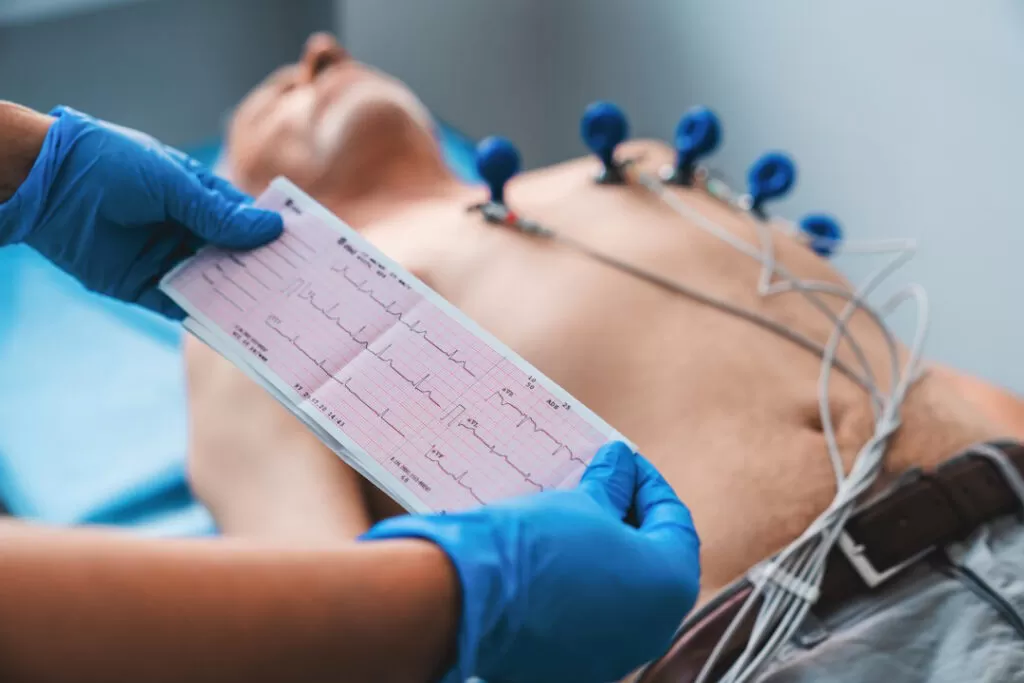
ECG (Electrocardiogram) is a simple, painless test that measures the electrical activity of the heart. It records how your heart is beating and can detect irregularities, chest pain causes, or signs of previous heart attacks. During the test, small sensors are placed on your chest to capture heart signals, which are displayed as wave patterns on a monitor or paper. This makes ECG one of the most effective tools for diagnosing heart problems quickly.


Why is ECG Important?

An ECG helps doctors identify heart rhythm disorders (arrhythmias), coronary artery disease, and damage from previous heart attacks. It is often the first step in diagnosing heart-related symptoms and allows for timely treatment and preventive care.

Basic ECG Tests:

Resting ECG – performed while lying still, detects heart rhythm and abnormalities

Stress (Exercise) ECG – monitors heart activity during exercise or exertion

Holter Monitor ECG – 24-hour portable device that tracks heart activity over time

Event Monitor ECG – records heart activity only when symptoms are felt

What to Expect:

You will lie comfortably on a table while electrodes are attached to your chest, arms, and legs. The test is safe, painless, and usually takes just a few minutes. The results are reviewed by a cardiologist, who will explain your heart’s condition and suggest further treatment if required.

Explore our other Services :

Scroll to Top